


Heartburn and bloating are common symptoms of acid reflux but can also occur with other digestive problems. Gastroesophageal reflux disease (GERD), hypochlorhydria, and pancreatic insufficiency are other conditions that may cause these symptoms—and that will also require treatment if your goal is to stay healthy.
Knowing the true mechanisms behind acid reflux symptoms can help you identify what’s causing them so you can make healthy changes and start feeling better daily. Here’s a closer look at the driving factors behind heartburn and bloating and digestive health solutions that may help.
What Is Heartburn?
Heartburn is a burning sensation that can be felt in your chest, just behind the breastbone. It occurs when stomach acids repeatedly flow back up into your esophagus. It is commonly confused with acid reflux, which is the mechanism that causes the feeling of heartburn.
Heartburn affects more than 60 million Americans at least once a month, though it’s suspected to affect more than 15 million Americans every day. It can be triggered by a variety of factors, which can sometimes make it difficult to identify its root cause. Common heartburn causes include alcohol, coffee, tea, and foods that are highly spicy or acidic, such as tomatoes, marinara, hot peppers, and citrus fruits.
Heartburn often goes away on its own within a few minutes or hours or with help from over-the-counter antacids. But chronic heartburn that occurs every day and that never seems to go away may require more extensive treatment, as it may indicate a more serious underlying health issue.
Is There a Link Between Heartburn and Bloating?
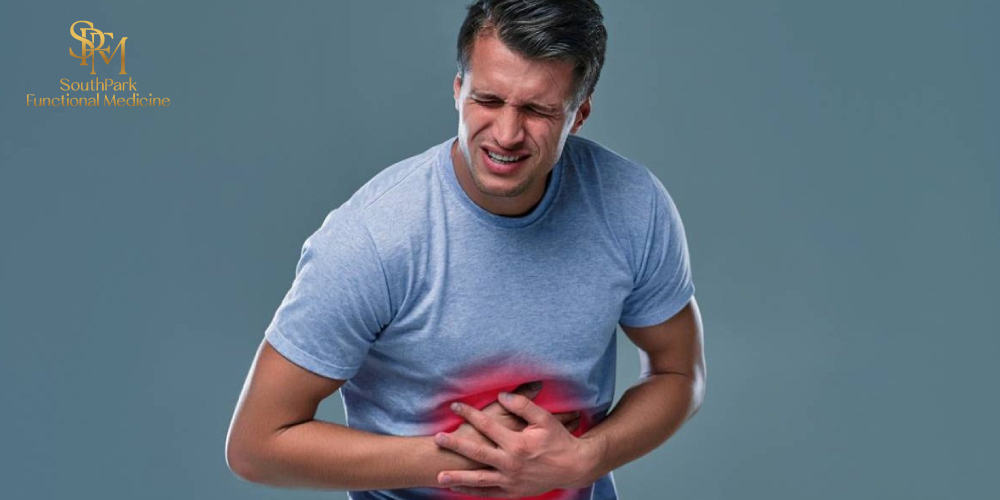
Yes, heartburn and bloating commonly occur with many digestive disorders. Heartburn is considered a gastrointestinal symptom, even though it occurs higher up in the body, in the chest. This symptom is a response to acid reflux.
Several factors can contribute to both heartburn and bloating, many of which are lifestyle- and diet-related. For instance, eating lots of beans can increase gas production during digestion, causing heartburn and bloating. Tomatoes may also cause these symptoms, given how their high acidity can increase stomach acid production.
What’s the Difference Between GERD and Hypochlorhydria?
Acid reflux that occurs consistently for a long time may be diagnosed as GERD, especially if it is causing injury to the esophagus. When not treated, GERD can progress from a mild condition into reflux-induced lesions or esophageal cancer.
Hypochlorhydria is a completely different condition and occurs when stomach acid production is too low. Also known as stomach acid deficiency, hypochlorhydria can interfere with digestion and inhibit the absorption of nutrients to cause malnutrition.
Hypochlorhydria shares nearly all the same symptoms as GERD. Malnutrition that occurs with low stomach acid may cause symptoms including hair loss, fatigue, and headaches.
What Is a Baking Soda Test, and Is It Useful?
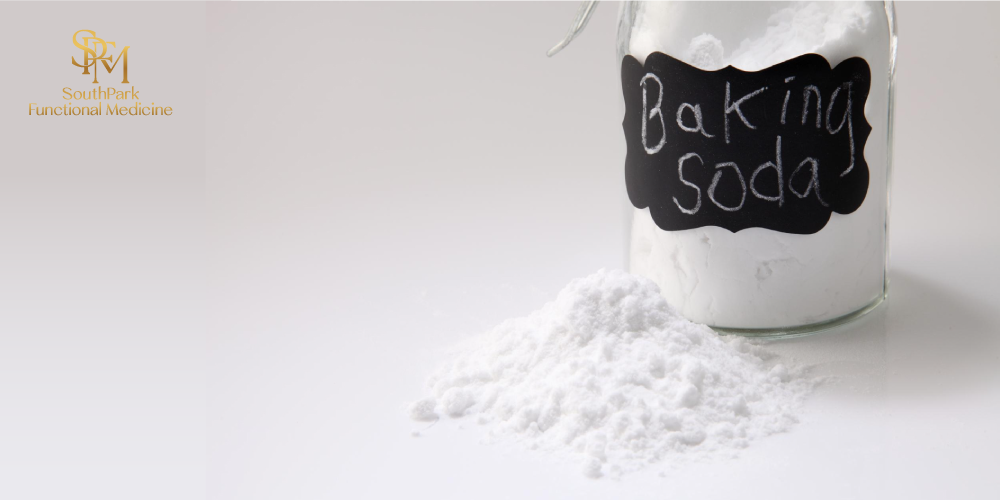
The baking soda test is an easy, at-home test that can help you determine whether you have low stomach acid or hypochlorhydria.
First, combine four ounces of cold water with one-quarter teaspoon of baking soda. Drink the solution on an empty stomach, and wait to see if it makes you belch. The theory is that if you do not belch within three minutes of drinking the solution, your stomach acid production may be too low.
It’s important to note that the baking soda test isn’t always accurate. The best way to determine whether you have hypochlorhydria is to meet with a functional medicine doctor for an evaluation and accurate diagnosis.
How Can Pancreatic Insufficiency Be Identified and Managed?
Pancreatic insufficiency is another serious condition linked to heartburn and bloating. It occurs when the body lacks enough pancreatic enzymes needed to break down foods and absorb nutrients. This condition is similar to hypochlorhydria in that it may also lead to malnutrition when not managed. Other complications of pancreatic insufficiency include osteoporosis, weakened immunity, heart attack, and stroke.
Pancreatic insufficiency can often be diagnosed with pancreas function tests, such as fecal elastase, fecal fat, and secretin pancreatic function tests. Ultrasound and CT scans may also be used to identify pancreatic insufficiency.
Treatment for this condition typically focuses on helping you maintain adequate nutrient levels. Nutrition therapy, nutritional supplementation, and pancreatic enzyme replacement therapy (PERT) are some of the most effective ways to manage pancreatic insufficiency. PERT is a prescription medication that mimics the effects of missing pancreatic enzymes so your body can break down nutrients in food more efficiently.
What Are Medical and Surgical Treatment Options for GERD?
Conventional treatments for GERD focus on treating symptoms of GERD, while functional medicine for digestion focuses on addressing the root cause of GERD. Medications and surgery are typically recommended for severe or advanced cases of GERD.
Medications
Proton pump inhibitors, H-2 blockers, and a newer medication called vonoprazan are all approved for the treatment of GERD.
Proton pump inhibitors work by blocking the action of enzymes that aid in stomach acid production. H-2 blockers inhibit the action of histamine receptors that play a role in GERD symptoms. Vonoprazan belongs to a class of drugs called potassium-competitive acid blockers, which work by binding to and blocking specific enzymes that contribute to GERD.
All three medications are available by prescription.
GERD Surgery
Surgery may prevent future incidents of acid reflux. There are two types of surgery performed for GERD: fundoplication and the LINX procedure.
Fundoplication for GERD involves wrapping a portion of the stomach around the lower part of the esophagus to reduce reflux. The goal of the LINX procedure is the same and involves wrapping a ring of tiny magnetic beads around the junction where the stomach meets the esophagus.
GERD surgery can be performed as a minimally invasive procedure using an endoscope—a long, thin, tiny tube with a camera at the end that provides a clear view of the inside of your abdominal cavity. Minimally invasive GERD surgery is typically associated with less scarring, less downtime, and a shorter recovery than open GERD surgery.

Which Lifestyle Factors Can Influence GERD?
If you are living with GERD, it may help to evaluate your lifestyle and identify where changes can be made to treat this condition or reduce your symptoms.
Diet and eating behaviors may be the most significant factors that influence GERD. Alcohol, coffee, fried foods, fatty foods, acidic foods, and spicy foods may all aggravate GERD. Eating especially large meals or eating too close to bedtime can also worsen GERD and its symptoms.
Smoking and medication use are other lifestyle behaviors that can influence GERD. Smoking can weaken the sphincter between the esophagus and stomach to increase acid reflux.
Several medications have also been implicated in the development and progression of GERD, including:
- Non-steroidal anti-inflammatory drugs (NSAIDs)
- Acetylsalicylic acid
- Hormone replacement therapy
- Birth control pills
- Bisphosphonates
- Calcium channel blockers
- Nitrates
- Antidepressants
- Anticholinergic drugs
- Benzodiazepines
If you have GERD and are using any of these medications, consider talking to your provider about other treatment options.
What Is the Role of Weight Management in GERD?
Obesity is a primary risk factor for GERD and can make your condition worse if not managed. Excess weight can put enough extra pressure on the stomach to cause stomach contents to flow back into the esophagus. Fat tissues may also drive systemic inflammation to make the esophagus more sensitive to injuries that may occur with GERD.
Losing excess weight and maintaining a healthy weight can go a long way toward helping you manage GERD. Weight loss can be achieved with a combination of exercise, quality sleep, stress management, and good nutrition. Eating healthy, whole foods such as vegetables, poultry, fish, and quinoa may help you lose weight and can replace foods in your diet that may worsen GERD, such as fried foods, fast foods, and sweets.
FAQ
What Is Commonly Mistaken for GERD?
GERD shares the same symptoms as many other conditions, including gallstones, stomach ulcers, and esophageal cancer. It is also commonly mistaken for heartburn and acid reflux. Seeing a functional medicine doctor for an evaluation is the best way to confirm or rule out GERD.
Does GERD Feel Like Bloating?
Yes, bloating is one of many symptoms of GERD, though not everyone with GERD may experience this symptom. Bloating with GERD may be caused by factors including gas, a bacterial infection in the lining of the stomach, and gastroparesis (slow stomach emptying).
What Causes Constant Heartburn and Bloating?
Constant heartburn and bloating are common symptoms of GERD. Acid reflux may cause the sensation of heartburn, along with bloating in some instances. Risk factors for GERD include obesity, smoking, and alcohol use.
What to Do During an Acid Reflux Attack?
Some acid reflux attacks cause great discomfort, but there are things you can try to find relief. Try standing up if you are sitting or lying down, drink small sips of water, or wear loose, comfortable clothing. Other remedies to try include chewing gum, drinking coconut water, and avoiding large meals close to bedtime.

How Do You Get Rid of Bloating From Acid Reflux?
Exercising, drinking peppermint or ginger herbal teas, and taking probiotics are some of the many practical ways to relieve bloating caused by acid reflux. You can also drink the same solution used for the baking soda test, given how baking soda may help neutralize stomach acid and relieve bloating.
Why Do I Get Full Easily and Get Bloated From Acid Reflux or GERD?
With acid reflux or GERD, stomach contents flow back into the esophagus. This can irritate the esophageal lining to cause discomfort and a feeling of fullness, even after eating a small amount. Other factors that may contribute to bloating with GERD include bacterial overgrowth, bacterial infection, and gastroparesis.
What Is the Real Cause for This and How to Treat It?
GERD can be caused by a wide range of factors, including obesity, pregnancy, smoking, diet, and certain medications. Identifying and treating the root cause of GERD may help minimize your symptoms, or make them go away completely.
How to Cure GERD Permanently?
It is possible to resolve GERD permanently by addressing its root cause. For instance, if obesity is contributing to GERD, losing excess weight may reduce or eradicate your symptoms. Functional medicine for digestion focuses on helping you cure or reverse symptoms of GERD by treating the root cause of your symptoms.
References
- Heartburn: What you need to know. NIH MedlinePlus Magazine. Published January 21, 2020. https://magazine.medlineplus.gov/article/heartburn-what-you-need-to-know
- Heartburn: MedlinePlus Medical Encyclopedia. Medlineplus.gov. Published January 30, 2023. https://medlineplus.gov/ency/article/003114.htm
- Chi Lan Tran, Han M, Kim B, Eun Young Park, Young Il Kim, Oh J. Gastroesophageal reflux disease and risk of cancer: Findings from the Korean National Health Screening Cohort. Cancer Medicine. 2023;12(18):19163-19173. doi:https://doi.org/10.1002/cam4.6500
- Definition & Facts for Exocrine Pancreatic Insufficiency. National Institute of Diabetes and Digestive and Kidney Diseases. Published January 2023. https://www.niddk.nih.gov/health-information/digestive-diseases/exocrine-pancreatic-insufficiency/definition-facts
- Ghodeif AO, Azer SA. Pancreatic Insufficiency. PubMed. Published January 16, 2023. https://www.ncbi.nlm.nih.gov/books/NBK555926/
- Brennan GT, Saif MW. Pancreatic Enzyme Replacement Therapy: A Concise Review. JOP : Journal of the pancreas. 2019;20(5):121. https://pmc.ncbi.nlm.nih.gov/articles/PMC6858980/
- Oshima T, Miwa H. Potent Potassium-competitive Acid Blockers: A New Era for the Treatment of Acid-related Diseases. Journal of Neurogastroenterology and Motility. 2018;24(3):334-344. doi:https://doi.org/10.5056/jnm18029
- Frazzoni M, Piccoli M, Conigliaro R, Frazzoni L, Melotti G. Laparoscopic fundoplication for gastroesophageal reflux disease. World Journal of Gastroenterology. 2014;20(39):14272-14279. doi:https://doi.org/10.3748/wjg.v20.i39.14272
- Restivo J. GERD diet: Foods to avoid to reduce acid reflux. Harvard Health. Published July 31, 2023. https://www.health.harvard.edu/diseases-and-conditions/gerd-diet-foods-to-avoid-to-reduce-acid-reflux
- Mungan Z, Pınarbaşı Şimşek B. Which drugs are risk factors for the development of gastroesophageal reflux disease? The Turkish Journal of Gastroenterology: The Official Journal of Turkish Society of Gastroenterology. 2017;28(Suppl 1):S38-S43. doi:https://doi.org/10.5152/tjg.2017.11
Shacker M, Latorre-Rodríguez AR, Mittal SK. Prevalence and severity of abdominal bloating in patients with gastroesophageal reflux disease. Diseases of the Esophagus: Official Journal of the International Society for Diseases of the Esophagus. 2024;37(2):doad058. doi:https://doi.org/10.1093/dote/doad058
FAQ
Can GERD cause bloating?
Yes, GERD (Gastroesophageal Reflux Disease) can cause bloating. When stomach acid frequently backs up into the esophagus, it can lead to trapped gas, belching, and a feeling of fullness or tightness in the abdomen.
Why does it feel like I have something stuck in my throat when I swallow?
This sensation, known as globus sensation, often occurs due to GERD, anxiety, or muscle tension in the throat. Acid reflux can irritate the esophagus and throat, creating the feeling that something is lodged there.
How does GERD cause bloating?
GERD contributes to bloating by slowing digestion and increasing swallowed air from frequent burping or acid reflux. The excess gas and pressure in the stomach can make you feel swollen or full even after eating small amounts.
